
Office Address
Email Address
If your toilet keeps running, leaks every time you flush, or has visible cracks in the cistern, you might be wondering if it’s time for a replacement.
The good news is that many toilet cistern problems can be fixed by replacing individual parts like the flush valve, inlet valve, or rubber seals. However, replacing the entire cistern is a different story.
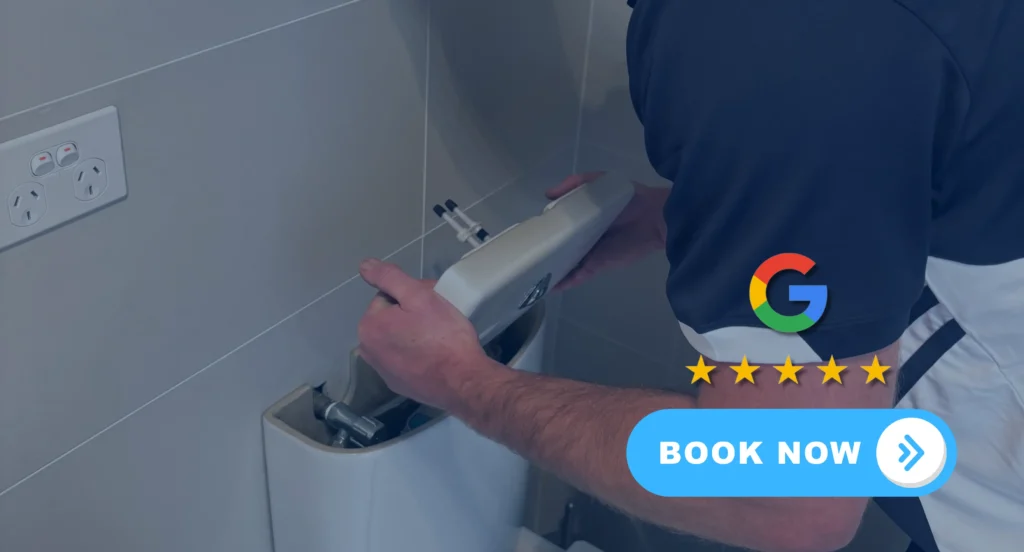
In Victoria, replacing a toilet cistern is plumbing work that must be carried out by a licensed plumber. While you can handle basic maintenance, installing a new cistern yourself is illegal. If something goes wrong, you could face penalties from the Victorian Building Authority, and your insurance may not cover any resulting damage.
This guide explains how a toilet cistern is replaced, what causes replacement to become necessary, and why Melbourne homeowners should leave the installation to a licensed Melbourne plumber.
Not every toilet problem means you need a brand new cistern. In many cases, replacing a single component is all that’s required.
Here’s a quick guide to the most common toilet cistern issues.
| Problem | Possible Cause | Recommended Solution |
|---|---|---|
| Running water | Worn flush valve or seal | Replace the seal or flush valve. Replace the cistern only if the problem remains. |
| Weak or inconsistent flush | Blocked rim jets or chain misalignment | Clean the jets, adjust the chain or replace the flush valve. |
| Noisy filling | Mineral build-up around the inlet valve | Clean the valve or replace it. |
| Water pooling around the base | Worn gasket or cracked cistern | Replace the gasket. If the cistern is cracked, replace the cistern. |
| Visible cracks or leaks | Age, impact damage or worn ceramic | Full cistern replacement required. |
| Slow refill | Blocked or faulty inlet valve | Clean or replace the inlet valve. |
If the cistern body itself is cracked or badly damaged, replacing individual parts won’t solve the problem. That’s when a full replacement becomes necessary.
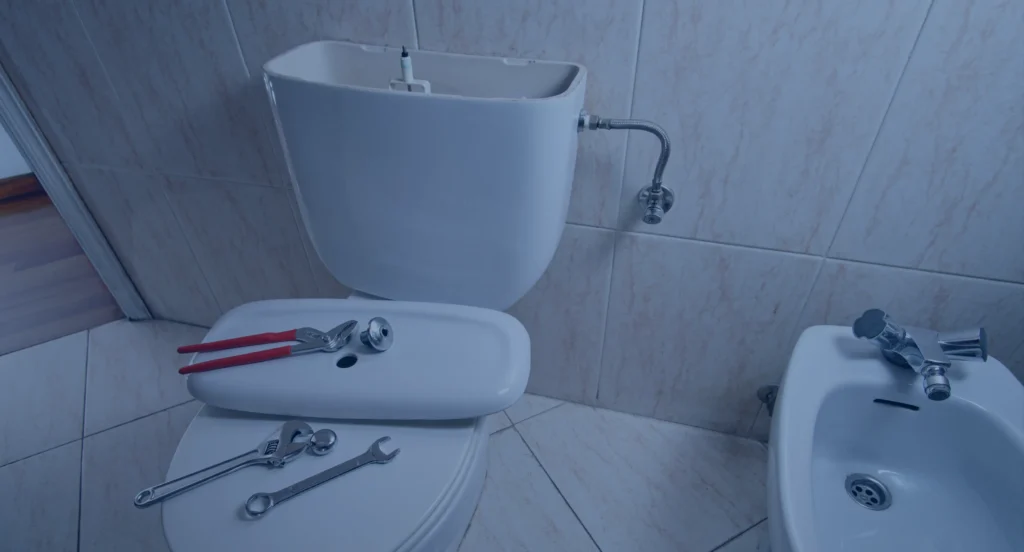
Before any work begins, the replacement cistern needs to match your existing toilet.
Matching the correct dimensions helps avoid unnecessary plumbing modifications and keeps labour costs down.
Your plumber will usually check:
Using a compatible cistern often makes installation faster and more affordable.
If you’re replacing other fixtures at the same time, it may be worth planning the work as part of your bathroom plumbing renovation.
Australian homes generally use one of three common cistern styles.
The cistern bolts directly onto the toilet pan, creating one complete unit.
This is the most common style found in Melbourne homes and is usually the easiest to replace.
The cistern sits inside the wall or behind cabinetry, leaving only the flush buttons visible.
These look sleek and modern but are more complex to repair or replace because access is limited.
A back to wall toilet sits flush against the wall while hiding the plumbing behind the pan.
Replacing these often takes longer because the plumbing is concealed.
The exact equipment depends on the toilet model, but plumbers commonly use:
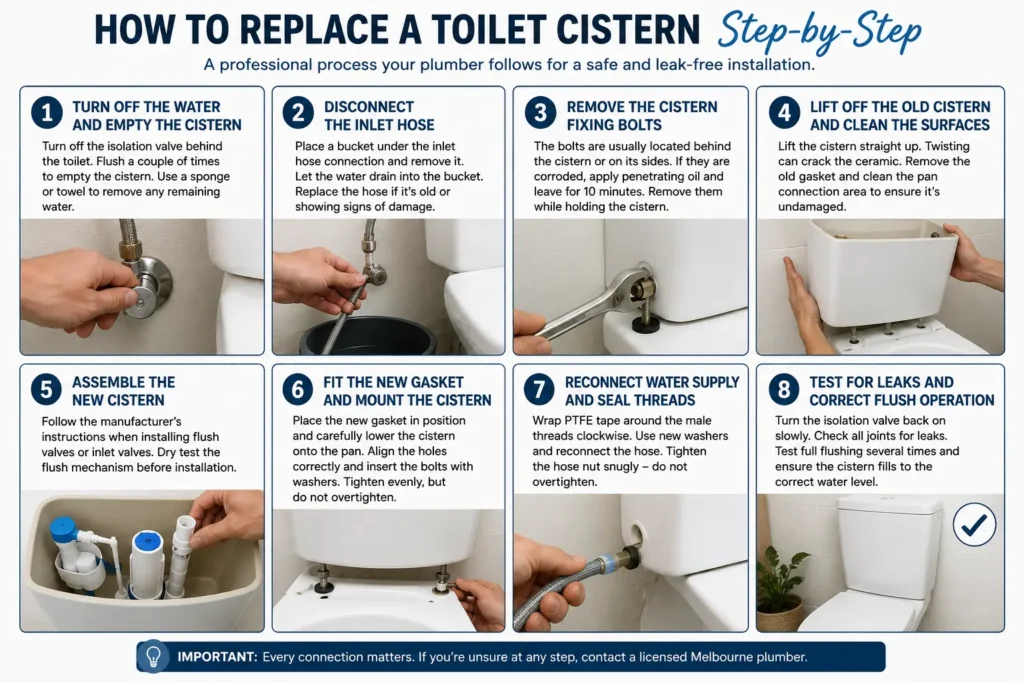
Although the process appears straightforward, every connection needs to be sealed correctly to avoid leaks.
The isolation valve behind the toilet is turned off.
The toilet is then flushed until the cistern is empty, with any remaining water removed using a sponge or towel.
A bucket is placed underneath before disconnecting the inlet hose.
If the flexible hose is old or showing signs of wear, it’s usually replaced at the same time.
The cistern fixing bolts are loosened carefully.
Older bolts often seize with rust, so penetrating oil may be applied before removal.
The cistern is lifted straight upwards to avoid damaging the ceramic pan.
The old gasket is removed and the mating surfaces are cleaned thoroughly.
Some replacement cisterns require the flush valve and inlet valve to be installed before mounting.
Everything is assembled according to the manufacturer’s instructions.
The new gasket is positioned before the cistern is lowered into place.
Bolts are tightened evenly without overtightening, as excessive force can crack the ceramic.
Fresh PTFE tape is applied to threaded connections and new washers are fitted.
The water supply is then turned back on slowly.
Every connection is checked for leaks.
The toilet is flushed several times to confirm the cistern fills correctly, stops at the correct water level and delivers a full flush.
Even after installation, a few issues may appear.
This is often caused by loose fittings, damaged washers or insufficient thread sealing.
The float level may require adjustment or the flush valve may not be sealing correctly.
Low water levels or incorrect button adjustment are common causes.
Because the cistern sits inside the wall, leaks often appear as damp plaster, bubbling paint or moisture behind cabinetry rather than water on the floor.
If you notice these signs, contact a licensed Melbourne plumber as soon as possible. If water is leaking rapidly or causing damage to your home, you may need an emergency plumber.

Most Melbourne homeowners can expect to pay between $350 and $650, including labour and the replacement cistern.
The final cost depends on several factors, including:
A straightforward close coupled replacement is generally less expensive than replacing a concealed cistern.
If you’d like to understand what influences plumbing pricing across different jobs, see our guide to plumber costs in Melbourne.
No. Replacing a toilet cistern is licensed plumbing work in Victoria. DIY installation is illegal and may affect your insurance if water damage occurs.
Most cisterns contain:
Turn off the isolation valve immediately and contact a licensed plumber. The leak could be caused by damaged seals, incorrect installation or loose fittings.
If you’re unsure whether the leak needs urgent attention, read our guide on what is considered a plumbing emergency.
In almost every case, continuous running water comes from a problem inside the cistern, not the toilet pan.
Whether your cistern has cracked, won’t stop running or simply needs replacing, Moz Plumbing can help.
With more than 10 years of experience servicing homes across Melbourne, we provide general plumbing services, repair and replace toilet cisterns, fix leaking toilets, clear blocked drains and handle all types of residential plumbing repairs.
If you’re unsure whether your toilet needs a repair or full replacement, give our friendly team a call. We’ll happily explain your options and provide an upfront quote with no surprises.